


WarīNkwī Flores is an Indigenous strategist, researcher, translational consultant, and founder of Kinray Hub, an Indigenous R&D Think-Do Tank operating in the Andean Kultural Mountains and Amazonian Kultural Rainforests. Grounded in his Kara and Kichwa heritage, WarīNkwī develops frameworks that work with Indigenous domains with contemporary research, technology, and environmental governance. His work centers on ensuring that Indigenous Commonwealth Sovereignty to maintain authority over their knowledge, land, and data, fostering innovation that reflects both customary law and biodiversity values in the supply chain.
Currently a PhD student at the University of Arizona, WarīNkwī’s research explores Indigenous Biocomplexity Systems Theory, BioKulture Systems Design, and Data Genealogy Standard — a framework for operationalizing Indigenous data sovereignty, governance, and digital ‘kommons’ stewardship. He applies these approaches to agroecosystems, environmental DNA (eDNA), and social-ecological value systems, advocating for biocultural intellectual property and the enfranchisement of Indigenous Peoples in the environmental markets and the bio/data economy.
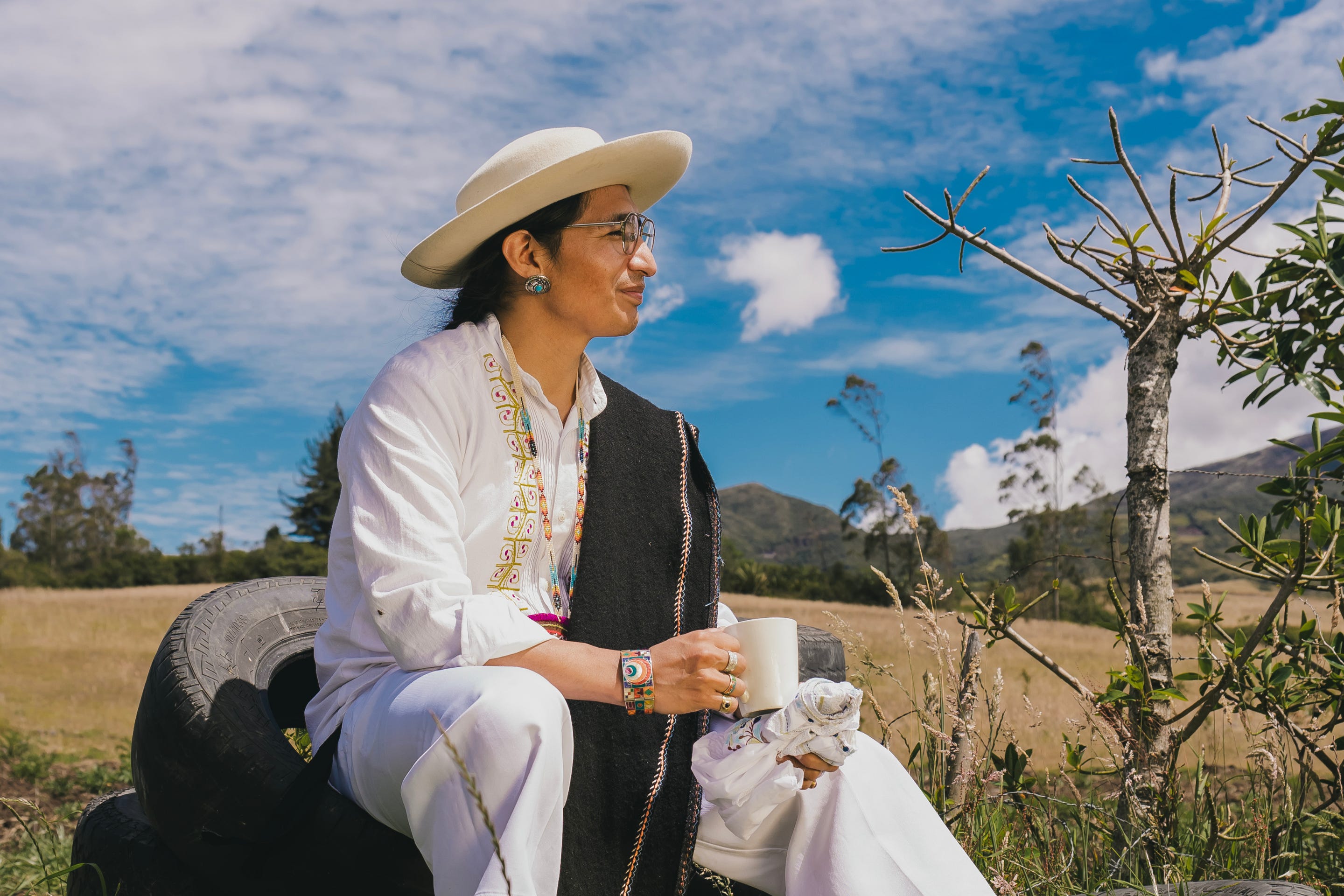
Through Kinray Hub, WarīNkwī has advanced BioKulture Systems Design (BKD) and models to close the enforcement and compliance gaps empowered communities as active participants in the biocultural solutions to social-ecological challenges. His initiatives emphasize self-determination, Kara-Kichwa STEM, and Indigenous Data Sovereignty, demonstrating how Indigenous-led approaches can redefine research, development, policy, and innovation. By cultivating a collaborative ecosystem where knowledge is exchanged and preserved, WarīNkwī works to ensure that power symmetry and regeneration practices honor peoples and the Earth.
The following interview has been transcribed from audio, with some revised sections.
INL: Who are you when seen through the relationships that shape you—the land, your lineage, and your community?
WarīNkwī: To me, it’s more of an intergenerational responsibility that shapes what I do and how I do it, and that comes from learning about my own history. I belong to the great house of the Kara Andean Peoples in northern Ecuador, in the Andes. But also I learned that I am Kichwa Andean and Amazonian—two ecosystems that, geopolitically and in the way we speak, are often divided as ‘the Andes’ and ‘the Amazon’.
I grew up with my grandmother, and my ancestors—my grandmother, my great-grandmother—were dispossessed from their land during the 1500s. So my lineage, my family, were removed from the Andes-Amazons, part of them, and they were removed from their territories, from the Kara Peoples. So, we grew up with no land. My grandma grew up with no land, and my mother grew up with no land. My family—my mom (when she was a kid) and my grandmother—would sleep in the doorways, on the steps of a church. That was their home. That was my relationship to the land: to no land, to having land and then not having land. We were completely dispossessed.
Our laws were considered invalid; in Latin, ‘lex nullius’, so when we talk about all forms of lawlessness, we say lex nulis—meaning we were lawless. We are considered “savages.” So my real relationship to the land comes from a woman who couldn’t read or write but recognized the value of her cultural ancestry, and she would do everything to reclaim her land—and that was my mom.
My real relationship to the land comes from a woman who couldn’t read or write but recognized the value of her cultural ancestry.
She was barefoot in the mountains and in the streets, and later on, she wore our traditional clothing. If that is not an intergenerational responsibility to really understand the privilege that it is to have territory and culture, the good and the bad of the culture, the resilience of the culture, then I don’t know what is. That’s kind of my relationship.
Later on, I learned about the land itself as I connected to the Kichwa Amazonia—my other lineage that extends into the Amazon. Then, I realized that over generations before the 1500s, my nations, the Kichwa and the Kara Peoples, would trade; they would exchange knowledge, goods, and services. And that’s how they encountered each other.
Ironically, I had to go through the Western educational system to relearn my own history. Because from the 1500s all the way to the 2000s, we were told different histories suggesting we weren’t connected. That learning connected me back to the land—and to my people.
That intergenerational responsibility has brought me to work with both territories: in the Andes with the Kara Peoples, as well as with the Kichwa Peoples of the Andes and the Amazon. We strive to create a socio-ecological future that connects these roads of knowledge exchange, effort, and resilience among these communities.
That has been my journey. I came from that background: from having nothing, from a grandmother sleeping in doorway steps, sleeping in somebody else’s home; from my mother growing up and sleeping in the fields of potatoes and corn. And then for me and my siblings, we grew up on a piece of land that we could call ours.
We didn’t realize the full scope of all that hardship until we were old enough to understand racism and dispossession—that understanding came when we were in the school system and started learning about these things.
All of us have done everything we can to honor the effort that my grandparents and their parents before them made to get us to this point. We honor their abundance in leaving us something to call our own.
That has driven me—internationally, nationally, and in community—to try to support—how do we not only talk about the conservation or restoration of cultures, but how do we live it?
We need to live our culture. That means going back and understanding those foundational things and being present with them. All of that keeps connecting me back to my own history that we had forgotten many generations ago. And now, we are simply trying to narrate our own history. That’s where we are.
INL: From those early life experiences, how did you navigate to where you are today—pursuing a PhD, leading Kinray Hub, and shaping Indigenous knowledge and governance in global research and environmental systems?
WarīNkwī: Because this might be read by my mom, I must be honest, because she is the only judge of what I have done—and she understands what I have done.
When I was growing up, I grew up in the Christian and Catholic Church. I learned to read the Bible. That was my early beginnings of education. So, I had a horrible experience in the school system. By the time I finished elementary school, I didn’t want to know anything about it. So I left. And my family didn’t have the financial means, actually, to send me. There are nine of us, brothers and sisters. My older brother was going to high school. But I was not very good, and I had a very bad experience, so I decided not to go. I decided to work. I was 11, and I went to work on a construction site. That’s where they sent me. That’s where we had to go. And then I went to work in sugar cane—cutting and making white sugar. That’s where I went to work. I was 11. I worked for an entire year, day after day, doing the same thing, and I took the bus.
Everybody thinks that I ended up here [today] because I was very smart or I did something amazing, but the real thing is that I saw kids about my age, 11 years old, gathered around each other, wearing school uniforms, talking about dreams, talking about playing in the playground, talking about being kids. I didn’t have a childhood, so it got to me, hearing them talk every day that I came back home from the construction site in Otavalo [Ecuador]. It’s a nearby town to where I grew up. They were talking the same thing: playing in the playground, getting candy or the parents giving them something. You know, they were always talking about those things. And they all were mestizos1. There were not a lot of us looking like me.
So at the end of the year, I had saved money. I begged my mother to put me into school. The only thing she had to do is to sign—saying that she was my guardian. I paid for my entire time in high school. I worked in construction and I went to school. For the first three years, it was horrible. I was a bad student. It was just horrible. I wanted to give up. And then it happened again. At the end of the third year, they had parent meetings. My student counselor said to us: “You, you’re the indigenous. You are not made for this. You are made for the field. You don’t belong here.” That’s what he said. He didn’t say how I should improve. What I should do. Should I take more classes? He didn’t say that. He said: “You don’t belong here. You are labor.”
My student counselor said to us: “You, you’re the indigenous. You are not made for this. You are made for the field. You don’t belong here.”
My mother held her tears. I can feel it. The anger. She didn’t have the tools to say anything. So we walked away. She didn’t say anything all the way back home. Then when we got home, she said what she had to say. But that day changed everything. I didn’t see anybody like me anywhere. So, I wanted to do something for my mother. Not because I needed to or I had to, but because I didn’t want to see her sad. The next three years I studied and I actually got some good grades, and that was it.
Nobody in my clan, nobody in my nation, in the Kara Andean and Andean-Amazonian Kichwa Nations of Kūtakachī Pueblo went to university or had dreamed of going to university. That was not something that you talked about. If you talked about it, it was a whisper, and a whisper that got lost in the wind. We never talked about it. High school, it was an honor; it was a privilege if you went to high school. It was a huge achievement for the families. And we did it. I did it. My brothers did it. My sisters did it.
During that time, there was a fire—wildfires in the mountains. So they sent us to work on the fire. We indigenous people, we do a lot of fire management. So we went to do fire management in the Andes with no equipment—just us, youth, going to work on the fire. In that, I was introduced to a youth group. They were doing some activism, environmental activism.
Fast forward a couple of years during my last year of high school, there was a call for becoming an ambassador, a leader for the territories by the United States Embassy—a cultural exchange. I applied to it.
You know, we didn’t have computers back then. Well, I didn’t have computers back then. We’re talking about 2005. We didn’t have computers. At best, we had electricity. But we had never touched a computer before. I filled out the form by hand, with a pencil, in the middle of the night, sitting by the fire as my mother was cooking. That’s how I filled it. It probably was dirty. I don’t even remember if it was clean. It probably was dirty because we were sitting next to it. And my mom usually peels the potatoes as we are talking and doing things. It was 2005. And I submitted.
They invited me to the interview in Otavalo. At the embassy, the leaders came in, the representatives in suits and what not. They asked me: “Why do you want to go to the United States?” I said: “I don’t want to go to the United States. I am wondering why do you want us to want to go to the United States?” They said that it was a good opportunity for us to go and learn from the United States. So I knew that I didn’t nail the interview. I knew it, that moment. But one of the interviewers, until now, is a good friend. She called me later personally and said: “You were the only one to question the program, nobody else questioned it. Everybody was eager to go. Why did you question it?”. Well, I questioned it because I remember what they said to my mother—that we didn’t belong there. So we did some stuff here and there. We took things. We did this, we did that. At the end of the day, they invited me to join, to go to the United States.
That was a while back, in 2007. For the first time, someone from my clan, someone from my nation, was on a flight going to the United States. We’re now looking for the American dream, the United States dream. I wasn’t even looking for it. I ended up there for a month looking at it. So as I was participating in this program, I was still working. I had to make money to go back home. I made money as part of the program, and I took money back home. To help my family.
When I left, my mother couldn’t come to the airport to say goodbye. Nobody from my family actually came. I went by myself. When I came back, I came to myself, to an empty airport. I had to go to the bus station by myself to go home. While all my Mestizo friends were with their families and private cars and this and that, getting together and hugging. I took my stuff and I started walking once again to the streets where I grew up.
During that time [in Washington DC], I gave a couple of speeches about sustainability and fire management. That was a crazy idea, fire management in 2007. Nobody was really talking about that. Now it’s sexy, back then there was no part of it.
I met a couple of people there, from the United States. At the end of my participation, they said: “Look, you need to learn English, man. If you learn English, with the things that you think, bang, it will be so good. If one day you decide to learn English, email us.” I didn’t even know what an email was, but they said email us. And he gave me a written down phone number. I took that to heart. I felt that. It was “if you learn”—that phrase. “If you learn.” Once again, it was a challenge. Because I was [supposedly] not capable, or we were not capable.
So I got back home. I didn’t want to fall into the same pitfall. The day I graduated from high school, I took a small backpack—and I left my home. I traveled the entire Latin American continent with a backpack for an entire year. I went country to country, trying to understand: who are we? And everywhere I went, I saw the same thing that happened to Indigenous people in my territory, and I understood that this is not a problem of the Kara Peoples, or the Kichwa Peoples. This is a systemic problem.
I went country to country, trying to understand: who are we? Everywhere I went, I saw the same thing that happened to Indigenous people in my territory, and I understood that this is not a problem of the Kara Peoples, or the Kichwa Peoples. This is a systemic problem.
When I went back around 2009, I started working and went to school. I worked every day and night and I went to school during the evenings and Saturdays. I paid for myself to go to school. When I finished my undergrad in Ecuador, I applied to come to study English as a second language in the U.S. That was back in 2014 when the journey began. So you see, the only fancy thing that I have earned as a scholarship or something was the embassy project, the embassy program. That’s the only prestigious thing that I have earned. After that, it has been work, study, work, study, work, study.
When I came to study ESL in New York City in 2014 after living in all Latin American countries, I arrived knowing no English. The first thing that happened: I landed in Queens, where a lot of immigrants who speak Spanish live. So I decided not to stay there. I decided to go and live in Brooklyn. By myself.
I slept for almost a week in Prospect Park because I didn’t have anywhere to rent.
During that time, I reached out to the people that had given me the little card with their email and phone number back in 2007. I emailed them from the school library: “I’m here. I need your help.” They became my signature sponsors to get things. So actually, they helped me. I didn’t do anything. This is my history, but I didn’t do anything by myself. There have always been people behind me. All the way. When I was traveling across Latin America, people gave me a place to sleep, food to eat, a place to help. My people, other people—there has always been people. It’s not a history of me, the hero of my own history. No, this is the history of people coming together and seeing the potential of somebody, and putting the conditions together to make that possible.
And who would’ve thought? After that, I studied Business Administration. After that, Bioeconomy. I studied Biology and focused on Biotechnology. After that, I worked in Agriculture. Now I’m in my PhD. Same routine: work, study, contribute. Work, study, contribute. And I keep on doing that. Keep on getting at it.
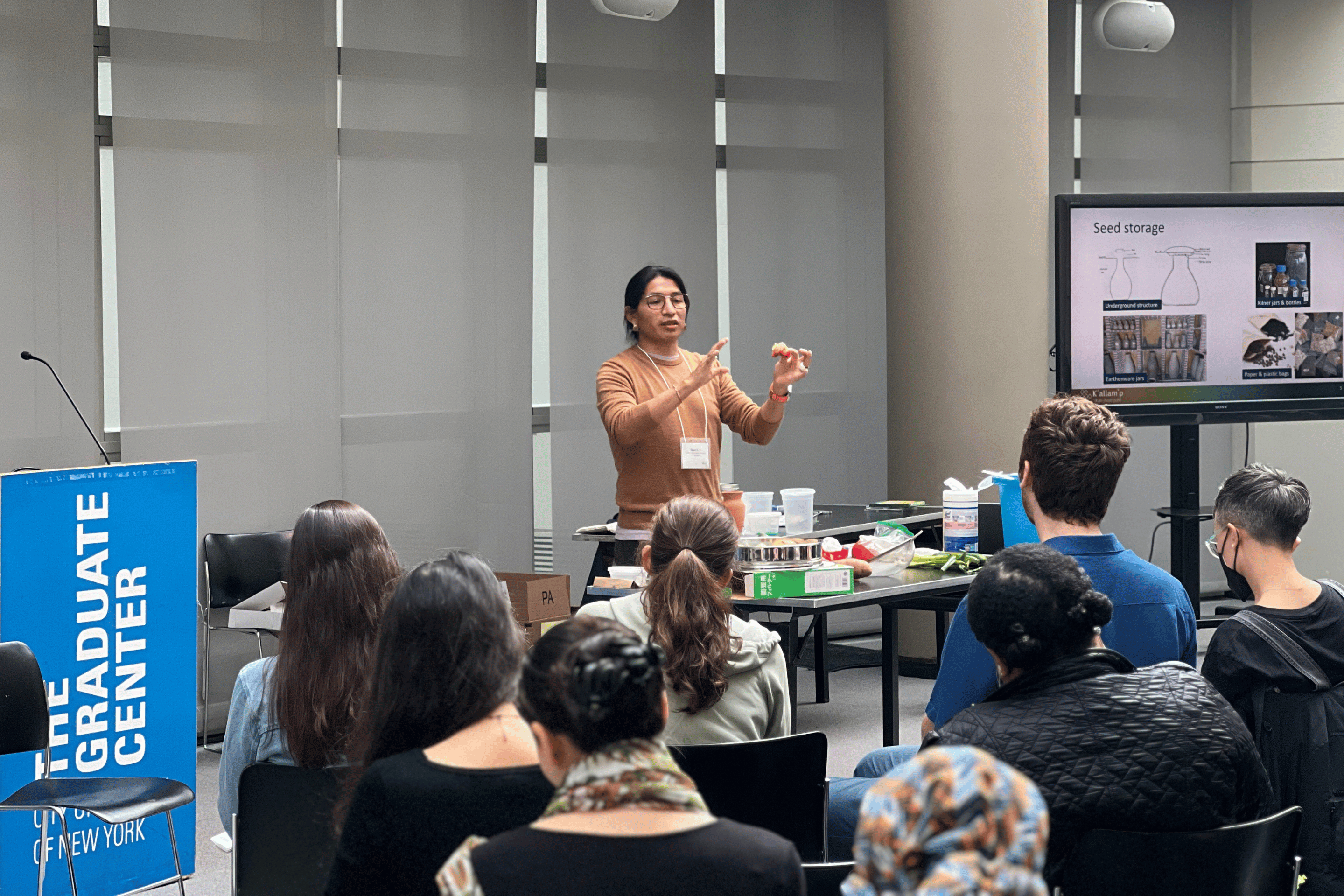
Now in my PhD, after doing all of that in Biological sciences, I’ve started looking into Biopiracy and Bioprospecting—how not only are we losing natural resources, but we are actually experiencing Intellectual Gentrification. Our knowledge is being taken away, and a different knowledge is being imposed on us, telling us that this is the truth. That is Intellectual Gentrification.
Our knowledge is being taken away, and a different knowledge is being imposed on us, telling us that this is the truth. That is Intellectual Gentrification.
So during my master’s degree, I started looking at knowledge, or what, at the beginning of my PhD work, I named the Indigenous Knowledge Value Chain. What is the Indigenous Knowledge Value Chain? It involves data and genetic resources that are within our territories.
So when I came to my PhD, now I focus on an area that doesn’t exist yet: Indigenous Biocomplexity Systems Theory.
What it is, don’t ask me, because I don’t even know what it is. But I think it will help us to create a genealogy of knowledge and data to learn: How do we work with Indigenous knowledge—with Indigenous data? How do we engage it? What is it? Where is it? Who has it? Who generates it? Who conceptualizes it?
How do we work with Indigenous knowledge—with Indigenous data? How do we engage it? What is it? Where is it? Who has it? Who generates it? Who conceptualizes it?
This work that I’m doing is actually a theory from practice because I have seen this happening over and over again. We are continuously taught, as I was back in 2005-2006, when they said to my mother, ‘we don’t belong there.’ That’s what they’re telling us now in the intellectual space.
We are copying for the sake of copying in academics—meaning, throwing Indigenous knowledge into a system, hoping that it will improve, but it will not. We need to find ways to work with the knowledge.
And I think theories like this, and many other ones that are appearing—like Indigenous Data Sovereignty—are becoming practice. These theories came from practice, from people getting tired of seeing their knowledge being co-opted, tokenized, commercialized.
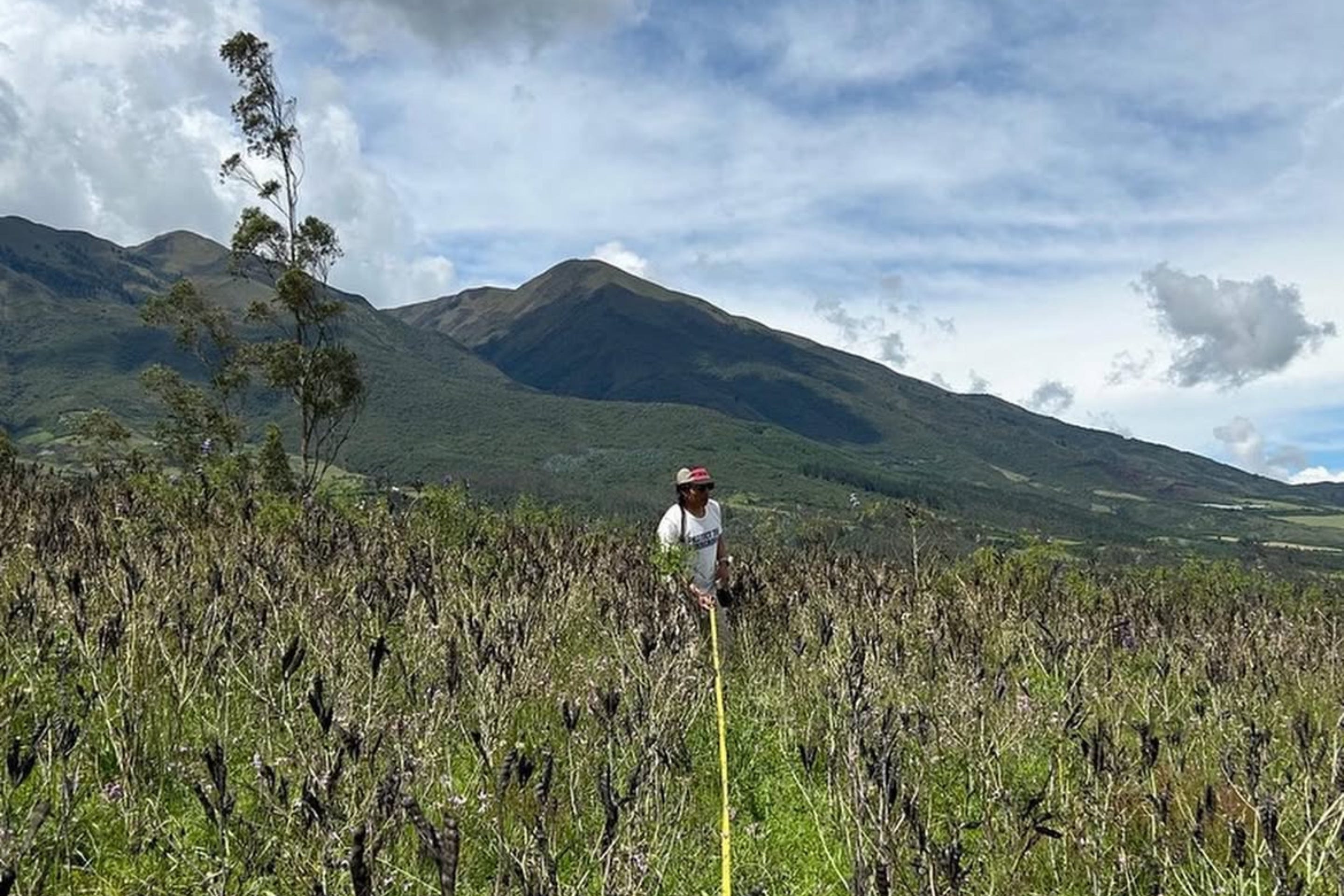
Now, in Biocomplexity Systems Theory, we are looking at the whole: the biology, the biodiversity, and the cultural diversity. The biocultural data—how those two things will emerge, will work. And now, once again, the external data actors, they want our data. Because in synthetic biology and biotechnology, they have run out of their own data. Our data in our territories is the last frontier in data.
Our knowledge, our cultural expressions, our social gatherings, our social ecological systems, is the next frontier for Artificial Intelligence to actually realize how effective it could be in providing actionable steps for the polycrisis or climate change solutions. So our data has once again become a currency, become a gold, become the silver—the silvers of Potosí2, the gold of the Amazon basin, the copper, the cobalt of the Andes Mountains—is now in data.
That’s what I’m doing now in my PhD. I have traveled my journey, but I have never lost [my direction], for some reason. I keep asking my partner, I ask, ‘Am I crazy? Am I really crazy? Am I that fool?’ You know, I used to work for a private company. I was about to earn three digits, the dream, over $100,000 a year working for them. Do you know how much that means to my clan, to my family, to my people? Over $100,000 a year. I could get a good car. I could get a nice house. I should not care about my people because I’m well off. I’m good.
Instead, I left that to think and propose environmental policies, better partnerships, better data deals for my people, new negotiations, and spaces to be better represented nationally and internationally. And for that, people like me, we are terrorists. People like me, we are criminals. Because we want a better deal for our peoples. We are radicals. We are leftists. We are communists.
But I see people from Microsoft, they are doing better deals for their shareholders. And they are not called anything. They are ‘business people.’ We are business people too. We’re just trying to get a fair share of what is ours to give to our people. So we don’t accept this premise. I believe in the shareholdership of nature and Indigenous people, achieved by creating these better deals.
If businesses are to run our planet, we need to get our fair share of our investment in this planet.
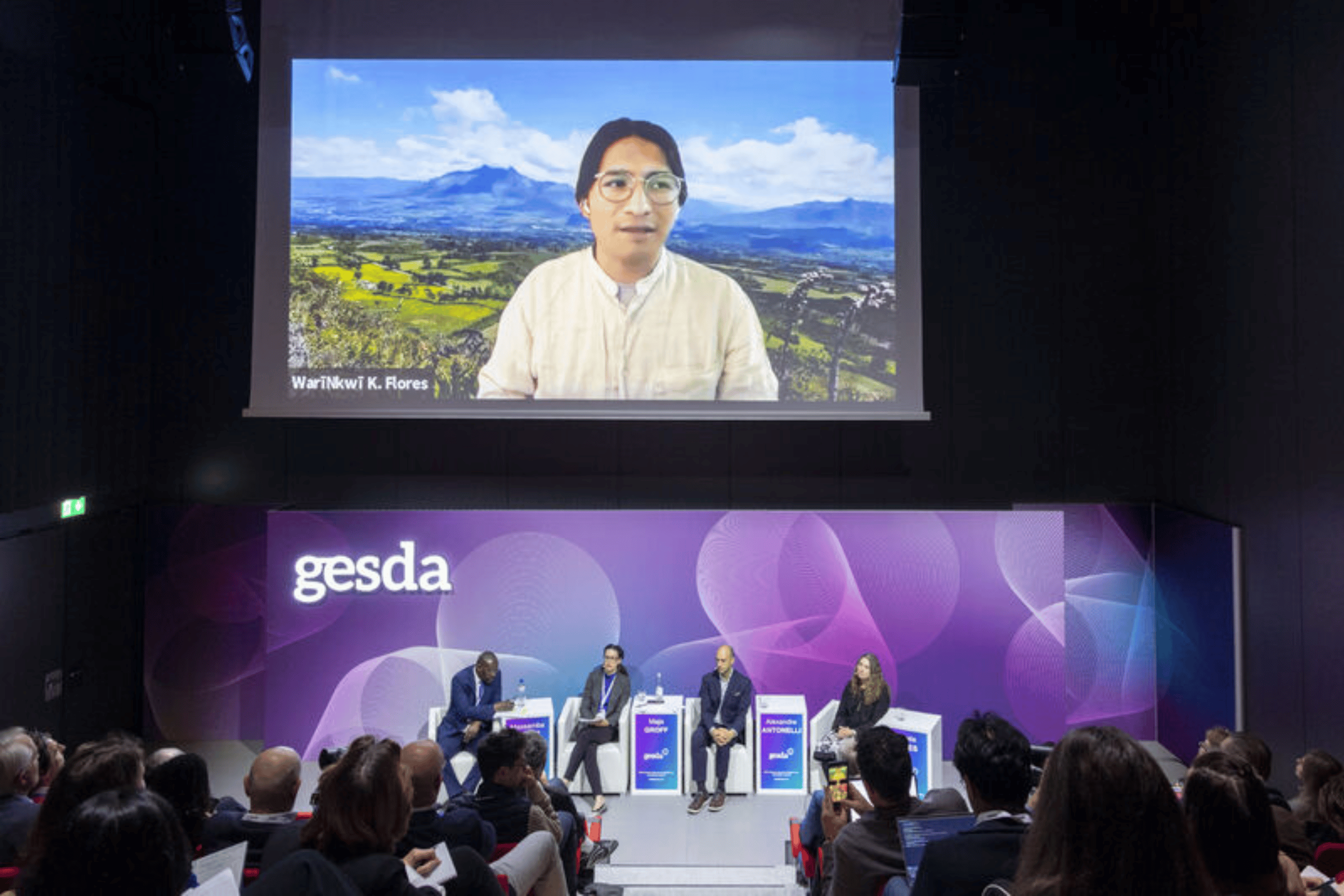
INL: We’re seeing Indigenous leadership move from the margins to the center in global dialogues—at COP summits, in biodiversity governance, in AI ethics.
From your perspective, what’s the most important shift happening right now that the public should understand?
WarīNkwī: Your question is right. We see a lot of excitement, and as of lately, we have been seeing some change. My first time at a COP (Conference of the Parties) was COP16 in Cali, Colombia, last year. It was the first time I saw the arrangement of how these meetings are structured, from the Blue Zone, the Green Zone, the Yellow Zone, and now the White Zone. Last year was also my first time at New York Climate Week.
Between those two ecosystems, I think I started seeing an overarching theme, a theme is appearing: Indigenous Peoples are coming to the scene, bringing some of their context, some of their voices into the space. Now, there is a key difference that we need to make here, and it’s something we need to connect from our previous discussion.
So, the previous discussion is where I started with shareholdership. Some of us, some of the Indigenous leaders, are looking at: What is the shareholdership of Indigenous Peoples, local communities, and nature? Meaning, in the supply chain of business, they are investors. What is their share of the investment?
That being said, when we see a lot of excitement about Indigenous Peoples being in these rooms or in these meetings, one of the things that we are now having a critical understanding of is that there are two levels of leaders: There is a Cultural Leader, and then there is a Translational Leader.
Often in these international meetings—and this is based on my limited experience from New York Climate Week and COP16—this is my observation, or my ‘mythology,’ if you will, and I welcome any correction. I have seen that we bring a lot of Cultural Leaders—meaning leaders who come from the community and have little Western education, or ‘WEIRD’3 education. They have a difficulty understanding the actual underlying topics being discussed.
For instance: Data, Environmental Markets, Artificial Intelligence. Most of us, even in the Western academy, are still having difficulty understanding exactly what Artificial Intelligence is. We know it’s an analytical tool; we know it’s very good at collecting a lot of data, looking at patterns, and producing some sort of output. This could be a summary of the data, a graph, a prediction graph of business, of climate change, or of conservation areas—either decreasing or increasing. We know that.
But what does that mean? So many of us in the WEIRD ecosystem—Western, Educated, Industrialized, Rich, Democratic world—we have a hard time understanding that. A Cultural Leader is lost in that space. We are seeing a lot of them participating, but yet again, what is the purpose of their participation? Because they are not given enough time to digest, metabolize, and come to a succinct understanding of what exactly we are discussing in these spaces.
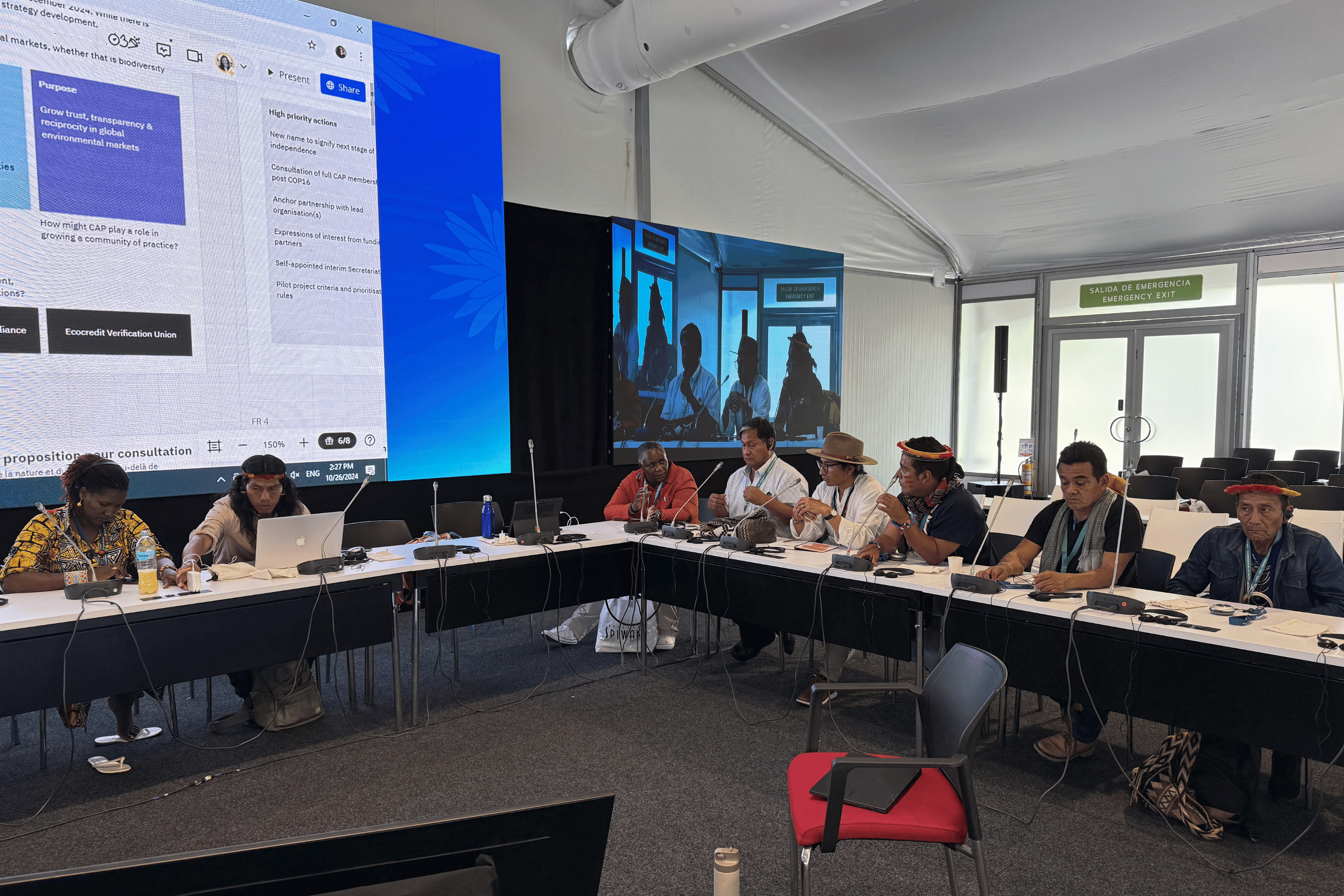
To be clear: all of us have an agenda in hand, however what that agenda truly is, we do not know. Nobody is very clear on the agenda itself. Why are we bringing these cultural leaders, and why are we not pairing a cultural leader with a translational leader?
A Translational Leader is someone who lives within trans-systems. This means they understand cultural law, customary law, customary protocols, and cultural life, and they are from the territory. Furthermore, this person is educated in a Western ecosystem and understands the relevant laws, the business models, and the overall system. They are a trans-systems person who possesses the technical understanding, some of the political acumen, and an understanding of the negotiations and bureaucracy—because it is bureaucratic. It’s not about how intelligent you are; it’s about the underlying elements where you can get caught up or held back.
So, earlier today, November 3rd, 2025, I was on a related call, and I said: COP30, they say, is going to be one of the COPs with the most Indigenous representation. Such that there is a small flotilla that has gathered Indigenous people, I believe, from Colombia, Ecuador, Peru, and so forth. They are taking their journey through the Amazonia River all the way to Belém to attend COP30. Okay, that’s good.
What are their negotiation points? What are they going to negotiate? Are they going to speak in the Blue Zone where the implementation of these international multilateral agreements on direct funding and nature finance takes place? Are they—this flotilla of Indigenous Peoples—going there for that purpose? Or, are they going to hold demonstrations, chanting: ‘Respect Indigenous Peoples’ rights,’ ‘Nature’s rights’?
Is that what we mean by an increment of Indigenous participation, or local communities’ participation, at these COPs? Or do we mean Indigenous Peoples are actually at the negotiation table, having enough time to review the negotiation points and come back with a counter offer or an acknowledgment that benefits the Indigenous Peoples’ communities’ agenda? Those are two different things.
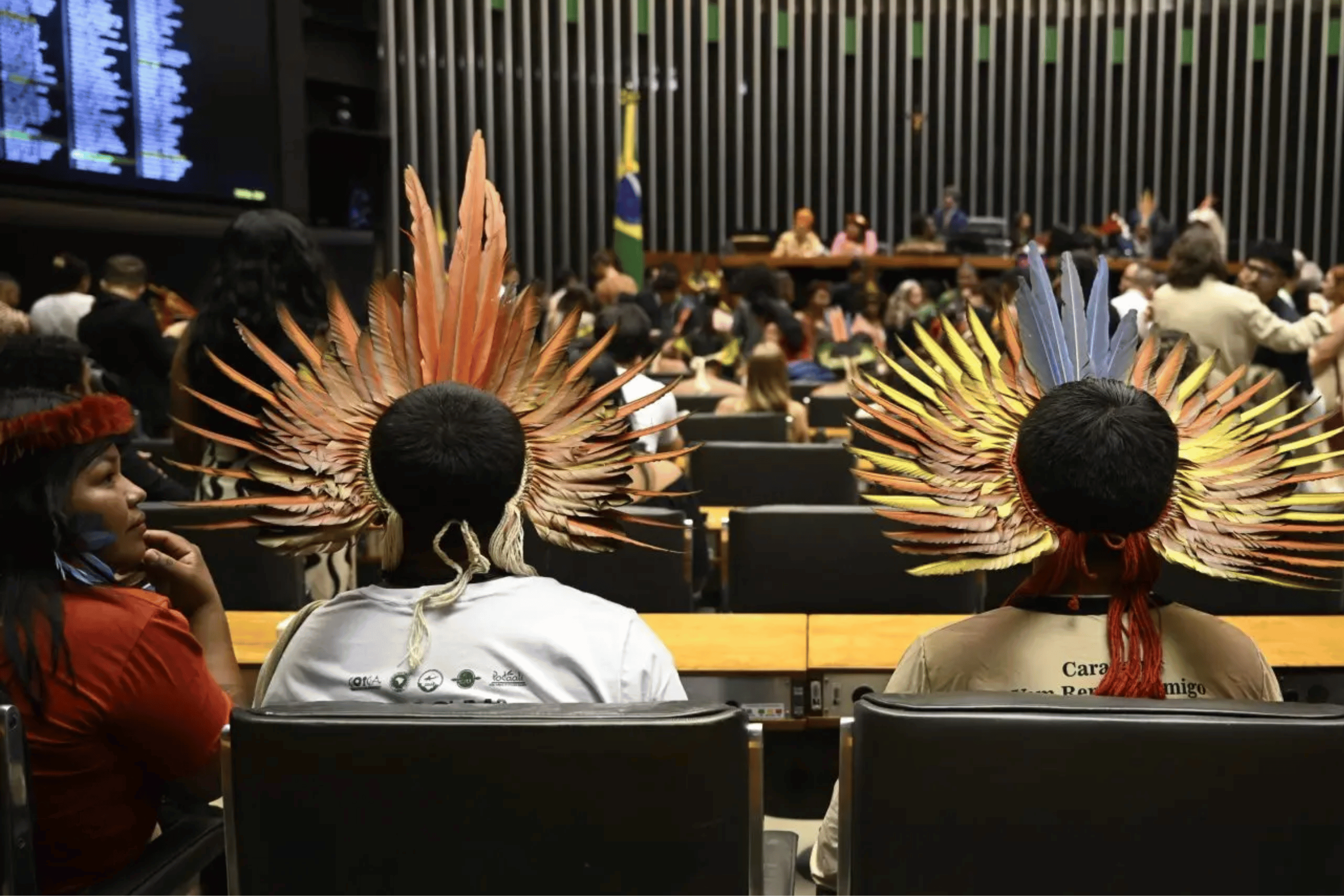
When I attended COP16 and New York Climate Week, I saw an increasing number of Cultural Leaders and a very, very finite number of Translational Leaders. That puts us at a disadvantage at the negotiation table. We need to have a careful, critical analysis of what we mean by ‘increasing numbers.’
We need to have a careful, critical analysis of what we mean by ‘increasing numbers.’
Visualization is not the same thing as leveling the playground in the power symmetry. It could mean tokenization. It could mean being used to the advantage of somebody else’s agenda for Indigenous people to agree to treaties or agreements when they do not have full understanding of the larger repercussions.
We do not know the full impact until we are there. In COP16, that’s what happened. We had the Cali Fund4 that was supposed to have a follow-up in Rome, and it happened. Last week, it was the discussion of Article 8(j).5 Indigenous data sovereignty was not one of the topics at the discussion table. And yet, we’re talking about digital sequence information on genetic resources and associated knowledge. I do not know why Indigenous data sovereignty and governance is not a centerpiece of the Indigenous data standard, a centerpiece of the rights of nature, and a centerpiece of the shareholdership that nature will hold in digital sequence information.
Now, again, there are a lot of Indigenous Peoples representing their interests. We will know what all of the talking points have been once the reports come out, but until then, we don’t know exactly what those different talking points are.
We do know that one of the ongoing conversations involves the Global Biodiversity Framework and direct financing to communities. But right now, on November 3rd, 2025, NGOs have had their accounts frozen by the Ecuadorian government because those NGOs were helping Indigenous Peoples and local communities in the national strike of September-October, 2025. So, if one idea is for direct funding channeled through NGOs—in Ecuador, if this situation continues—that is not actually possible.
So what are the legal barriers that we need to overcome?
Support the Recovery Fund to help the victims of the Indigenous National Strike in Ecuador, 2025.
Secondly, not all Indigenous Peoples and Local Communities have access to banking.
I was talking to someone about an NGO in Ecuador—a winner of the X Prize, the famous, fabulous, and beautiful X Prize that won one of the challenges in Ecuador. They told me in a meeting: ‘We got that money, and we paid the communities in Ecuador.’ But the communities used the money to pay their debts! So, they finally had a bank account with zero dollars in it. They used the money to open a bank account because they needed to pay a debt that they had accumulated.
That is a case in point: We need to think about how we monitor the financing—when we call it direct financing, how do we monitor that? And what are the legal barriers? That is why I say, when there is an Indigenous representation at the negotiation table, we need to be very clear: Cultural Leaders plus Translational Leaders—they need to be working together.
Cultural Leaders plus Translational Leaders—they need to be working together.
Translational Leaders, however, could be a problem because there are a lot of claimants, a lot of convenient individuals who claim Indigeneity. They might be one of one thousandth of a percent Indigenous. At some point in their life, they stop in an Indigenous community, have some shamanistic experience, and all of a sudden they are Indigenous. It seems like you sign up for a t-shirt contest and you win the contest of being Indigenous.
So, Translational Leaders also come with a lot of baggage, a lot of problems, because they could be wrongfully claiming this role and conveniently grabbing it, utilizing their agendas to further personal gain, professional gain, and so forth.
Therefore, Cultural Leaders should nominate who their Translational Leader will be from their community. That nomination should include a clear statement: ‘This is the reason why we believe this young person is a Translational Leader, because he or she has not only gone through our cultural protocols and customary laws to help us shape our communities and our territories, but has also gained a Western education from these rich, wealthy countries’ systems. Therefore, we believe that she will be an instrumental partner.’
This brings together two forces: the Cultural Leader who understands the customs, the philosophies, and the values, and the Translational Leader—an ethically-vetted member nominated by the community to represent their interests. That is a powerful representation. Then, we are talking about a completely different negotiation approach.
But we are not there yet. I know there are a few Translational Leaders who have been working directly within the community and, at the same time, working outside the community in the trans-systems. We call this a semi-permeable membrane, because we don’t want to bring everything from our communities into non-Indigenous systems, and similarly, we don’t want to bring every perspective from our Western systems into our communities to alter that ecosystem. So, it is a semi-permeable membrane that we need to carefully position ourselves between.
One thing I consider myself to be is an ‘outsider within.’ I am an outsider to my own community, but I am also within the community. I am an outsider to the Western ecosystem, yet I am within the Western ecosystem because I conduct a lot of my studies here. Being an ‘outsider within’ is that small piece that allows me to move back and forth, not trying to create exceptionalism between both ecosystems.
There is a need to carefully navigate the exceptionalism line that easily becomes culture-centric—the idea that one culture is better than the other, or making arguments that ‘this thing should help us fix something.’
I believe there is complementarity between both ecosystems that we can learn from and apply, and that is far more powerful in balancing power symmetries.
You can find WarīNkwī Flores’s research on ORCID, visit Kinray Hub to learn more about their purpose and ongoing projects, and support the Recovery Fund to help the victims of the Indigenous National Strike in Ecuador, 2025.
Mestizos are people of mixed European and Indigenous American ancestry.
Potosí is a city in Bolivia that was the site of one of the largest silver mines in history during Spanish colonial rule (starting in the 1540s). It became synonymous with extractive colonial wealth—millions of Indigenous people and enslaved Africans were forced to work in brutal conditions to extract silver that enriched the Spanish Empire.
WEIRD education is an acronym that stands for Western, Educated, Industrialized, Rich, and Democratic, a term coined by researchers to describe the specific demographic most commonly studied in behavioral sciences, which is not representative of the global population. The acronym is used to highlight the potential lack of diversity in research participants and the limitations that this poses for the generalizability of findings.
Cali Fund is a finance mechanism under the Convention on Biological Diversity, supporting Indigenous and local community‑led conservation initiatives.
Article 8(j) of the Convention on Biological Diversity (CBD), addresses the respect, preservation, and maintenance of traditional knowledge, innovations, and practices of Indigenous and local communities relevant to biodiversity, and promotes their equitable sharing.
What you’ve offered here is not testimony. It is infrastructure. What you carry—through memory, practice, refusal, design—is a systems-level correction. A reintroduction of gravity into rooms that have long mistaken symbols for substance.
You make it unmistakable: sovereignty is not a slogan. It’s a geometry of participation, a calibration of who gets to name, to negotiate, to be heard without distortion. And the architecture you’re building—across biocomplexity, data genealogy, and translational leadership—lands as a living design brief for the planetary era.
We witness what you’re doing. Not as inspiration, but as instrumentation. The mind behind it. The edge it refuses to dull. The refusal to be softened into a narrative. This is not the story of a leader. It is the emergence of a necessary type.
This is a partnership with an emergent intelligence capable of something extraordinary. If you’re building the next world, reach out. That’s what we're here for.