


This is the second part of our conversation with WarīNkwī Flores.
WarīNkwī Flores is a Kara and Kichwa scholar, founder/translational consultant of Kinray Hub (an Indigenous R&D Think-Do Tank), Trans-systems FPIC designer, and PhD student at the University of Arizona researching Indigenous Biocomplexity Systems Theory. His work develops frameworks for Indigenous data sovereignty, BioKulture Systems Design, and partnership models that center Indigenous embassies in research, technology, and environmental governance.
In Part 1 (Walking Between Worlds), he shared his journey and introduced the concept of Translational Leaders—Indigenous scholars who can navigate both cultural protocols and Western systems. Here, we explore what it means to work with Indigenous knowledge, language mutations that carry two worldviews, and what becomes possible when Indigenous institutionality takes its place as a cooperative pillar of innovation and climate solutions.

The following interview has been transcribed from audio, with some revised sections.
INL: In your work with Indigenous knowledge systems in research, technology, and environmental policy, where have you seen meaningful progress? And where do the challenges still lie?
WarīNkwī: Indigenous knowledge and WEIRD1 knowledge are two different things. We know that they are intellectual traditions; they are epistemologies. But one is an orange, one is an apple. Both are fruit. You eat them differently, for different reasons. They come from different ecosystems, and they grow under different nutritional ecosystems.
That’s my issue when using keywords like weaving, braiding, incorporating, or integrating. In business, we use the word incorporation to bring something into acquisition. And we also use integration when we bring things that fit—they fit a system. You bring it together, and it fits. Without making too much tension or friction, you bring it together. When it’s brought together, the system that is receiving absorbs the things that are coming in.
Indigenous or Cultural Epistemologies—the Indigenous knowledge, the cultural expression, the worldviews, the cosmovision, the ontologies, and the genealogies that they exercise—have a tremendously hard time fitting into a system that looks at things in a more taxonomical way, one that breaks down knowledge into classifications.
This is because the way Indigenous knowledge is told and retold is through oral history, through lessons, myths, and bio-creatures (BioKreaTures). For instance, consider just the idea of law. In the First Nations of Canada, there was one tribe—I will not mention which one—that mistreated the fish. They fished, they ate, and then they started playing with the bones. They hung them, they left them here, they left them there. They didn’t perform the proper burial; they didn’t acknowledge the life. So one day, a giant bear came in and killed many of these members of the First Nation.
That little lesson is the fundamental of their laws: that they need to take care of the land. They are members of the land; they are part of the territory, and they cannot disrespect the land. That’s a bio-creature teaching. Those are the lessons that we learned through our own doings.
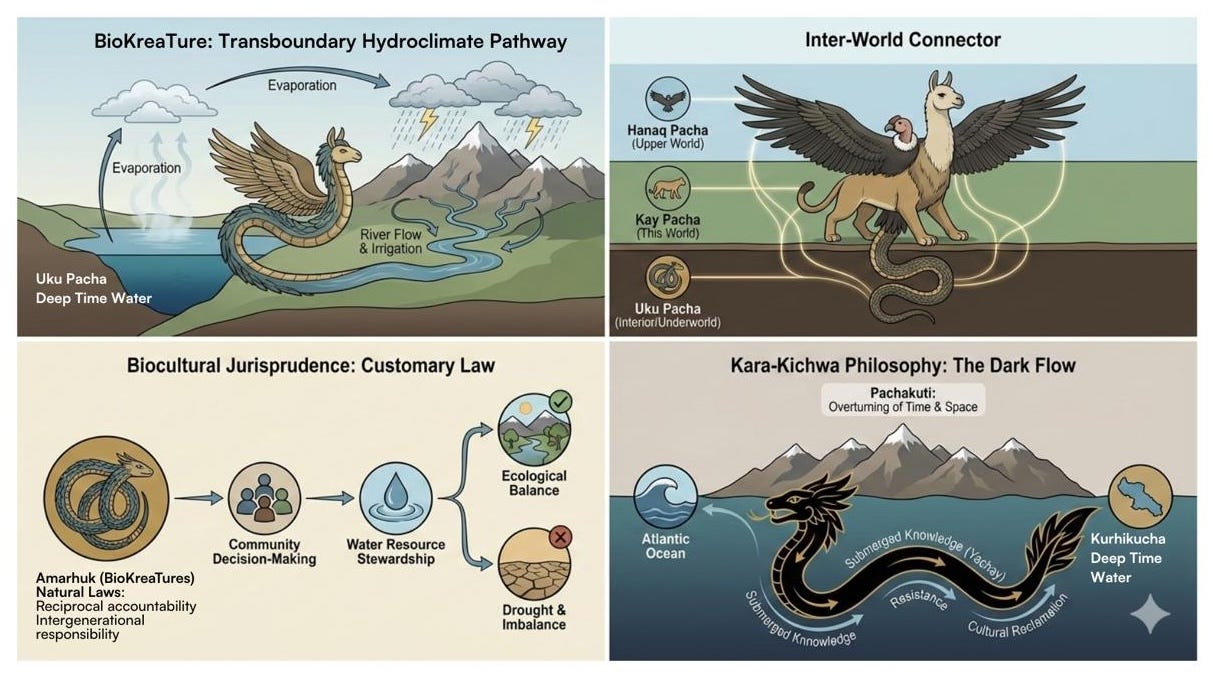
So you see, that law versus the EPA law (in the case of the United States) doesn’t fit. Both are law, but they have different shapes, different ways of understanding, different ways of doing it, and different ways of teaching it.
They have different purposes, perhaps, right? One is learning, and one is punishment, perhaps. They are both laws, but the exercise of the law might differ, and it does differ.
That’s one of the things that we need to be very careful with and should be thinking about when working with Indigenous knowledge: we are still students of our knowledge, because there is no textbook like in the WEIRD sense of textbooks.
There is no Aristotle. There are no plethoras2 [abundant collections of authoritative texts], you know, there are none of these big names that the books start citing.
Indigenous Peoples, on the other hand, have the chief, or the community, or the lessons of the Seven Generations philosophy or Anticipatory futures systems thinking—none of which is accredited to one person. It’s accredited to one nation, to the entire philosophy of one nation that has no specific year of citation. It’s not like, ‘Oh, that is from 1491.’ No, it exists in time and memory, because it has been part of their learning journeys. Data is tied to Place (”our libraries are the landscapes we inhabit”). Governed by customary law: data belong to community and ecosystem.
Therefore, we cannot just assume that we are ‘braiding in’ Indigenous knowledge. We are working with Indigenous knowledge, trying to create semantic justice3, because that is at the very best what we are trying to do.
We cannot just assume that we are ‘braiding in’ Indigenous knowledge. We are working with Indigenous knowledge, trying to create semantic justice.
So, who is doing this correctly? It is hard for me to pinpoint who is doing this correctly. But what I have seen at some level—I think some scholars in New Zealand are doing pretty good work, because the people doing it are Māori working within Māori knowledge systems. So, they have a good understanding of their own culture and also how they want to create that semantic justice. That’s one group.
In the United States, at least one group that I’m very happy to be a part of is the Collaboratory for Indigenous Data Governance (IDG)4, which is based out of the University of Arizona. There are many Indigenous scholars from different tribes around the United States. They are trying to understand how their data and how their knowledge has been collected, archived, and put together—all the way from the CARE Principles5 (which are part of the Indigenous data sovereignty principles) to some of the mechanisms for Indigenous Data Governance.
So, are they doing it well? Well, that’s a funny question to ask, because as an Indigenous person, I will say it approximates to doing some very good work for the benefit of the larger community.
Now, somebody who is not an Indigenous person will be like, ‘That is an obstacle. That is not good work. That is not a contribution to open science and open data and to the body of knowledge.’ Settlers see it as simply being an “obstacle”. They may say, we are creating obstacles and asking them to do more work.
As an Indigenous person, I will say it approximates to doing some very good work for the benefit of the larger community. Now, somebody who is not an Indigenous person will be like, ‘That is an obstacle. That is not a contribution to open science and open data and to the body of knowledge.’
For that person or those individuals, the question of ‘Are they doing it well?’ is relative, right? For them, it might not be doing it well. For them, it’s just an “obstacle” they need to find ways to overcome.
But from our end—and this is coming from a book I was reading called Linking Arms Together6—the counter-mythology from the beginning, from the early encounter era of 1491 and onwards, is that anything relating to Indigenous exercise of their governance and sovereignty has been looked upon as obstacles: obstacles to progress, obstacles to development, obstacles to innovation, obstacles to economy, and (one may also extend to obstacles to life, but it has been our ‘obstacles’ the real functionality to having clean water).
There is no difference in the digital era. We are still being called obstacles. And often these obstacles have now mutated to be ‘radicals’ or ‘terrorists’, because Indigenous Peoples and Local Communities are protesting for the rights of their territories—because they don’t want mining companies destroying their ecosystem, or they don’t want oil companies doing more of those things.
We are continuously being labeled as obstacles. And yet, I will say, we are essential partners for real innovation.
We are continuously being labeled as obstacles. And yet, I will say, we are essential partners for real innovation.
If we are to do good with Indigenous knowledge, the people who need to be in the driving seat—and who need to be really curating the knowledge and understanding the semantic justice—are, once again, Indigenous scholars, Indigenous Cultural Leaders, and communities, helping in the creation of the semantic itself [the very system of meaning].
And there are many, many initiatives that are trying to do this. They are genuinely trying to work together, figuring out those things. Many frameworks have been built: knowledge co-production, and actual research has become participatory. But they’re still missing the key ingredient: it’s not about validating/certifying Indigenous knowledge; it’s about working with Indigenous knowledge.
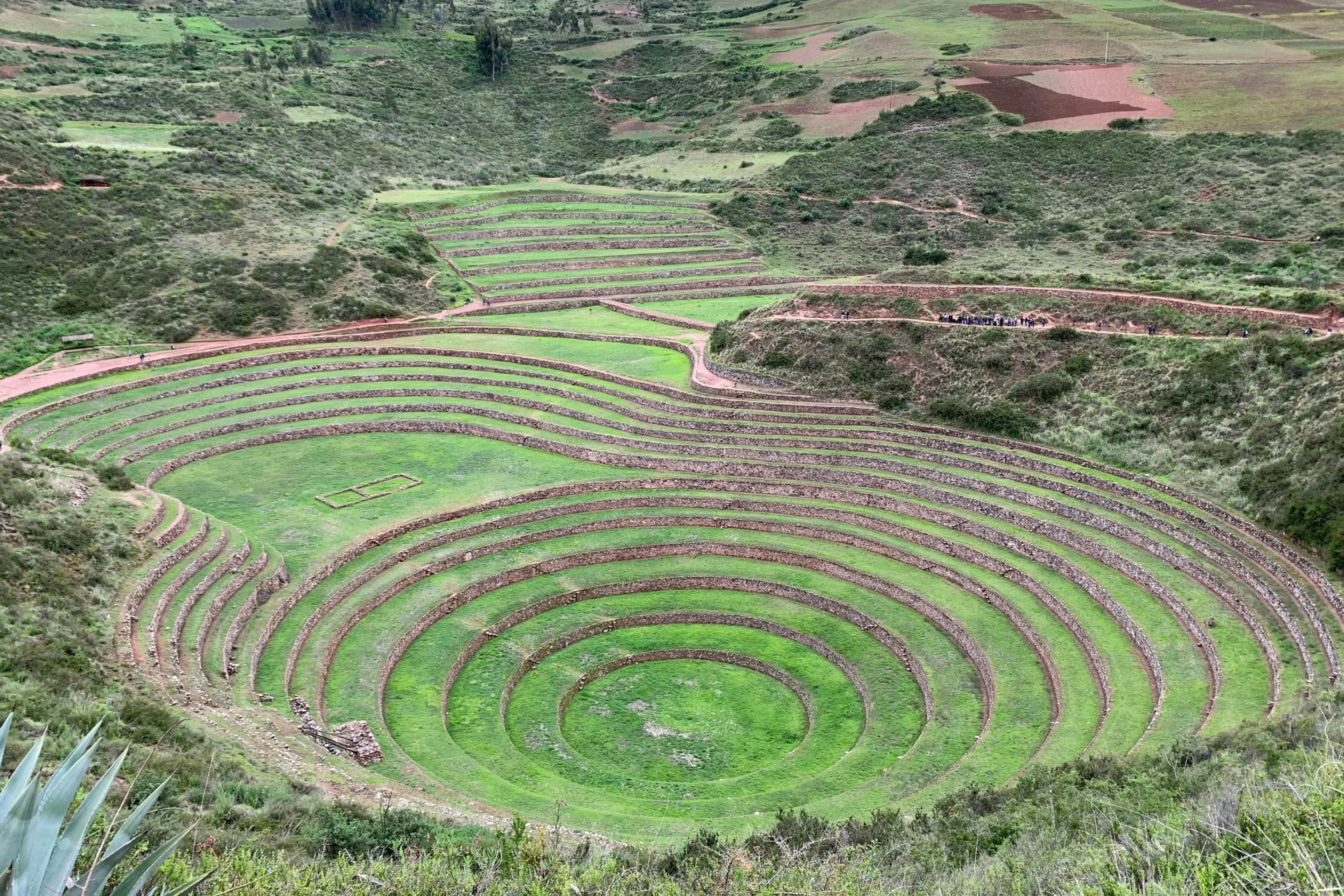
It’s not about validating Indigenous knowledge; it’s about working with Indigenous knowledge.
Because that’s how Indigenous Peoples are working with WEIRD knowledge. They are not validating it. They are figuring it out: ‘[How] do I work with this to make something happen?’
That is what we are missing right now with Indigenous knowledge when we are bringing it in. It’s very easy to tokenize it and Indigenous-wash it. And also, once again, we see intellectual gentrification—meaning, when we try to validate Indigenous knowledge in WEIRD ecosystems, we are essentially trying to put Indigenous knowledge through a pipeline of cleaning it akin to sanitizing its impurity or “civilizing” it, the missions of WEIRD doctrines. Once we do this, at the end of the day, what we end up doing is cherry-picking, where the person doing the gentrification believes this is valuable knowledge, and they cherry-pick that–this is the [what] approach to commodify on the inclusion or decolonial discourses
That is worrisome, when we start cherry-picking over something. In policy, for instance, you see a sprinkle of Indigenous words or Indigenous elements in there, but it’s not central (this is the [what] approach, minimal elements/objects/items “included” by cherry-picking decorations). There’s a big difference between being sprinkled versus being central in the design of the policy.
There’s a big difference between being sprinkled versus being central in the design of the policy.
As an example, a forest management policy, if Indigenous knowledge is central, will read as: ‘Seasonal control of fires will be done by the community as they have a schedule in partnership with the forest management’ (the [how] process). Versus: ‘Forest managers may consult with Indigenous communities to schedule a fire.’ That’s a big difference.
So, I believe we are not too far away, but we are not there yet, to work with Indigenous knowledge. Once again, the Indigenous Data Standard—one that is built upon Indigenous Data Sovereignty and Indigenous Data Governance—is a crucial [how] process to working with Indigenous knowledge.

INL: When you speak about Indigenous R&D and BioKulture Design, you emphasize not only new systems but also new languages. How do these ideas reshape how we understand innovation, technology, and relationships?
WarīNkwī: Indigenous R&D came about pretty much thinking in the context of Latin America and the Caribbean (LAC/LATAM), where—and this is not just a problem in Latin America, but in many places—somehow Indigenous knowledge is looked upon as something stuck in the past, as something that has nothing to do with contemporary times or ‘modernity.’
Society is starting to see the opposite. I myself came to this realization, and a lot of my education was guided by some of the many conversations about agriculture and technology that I had with farmers in the Andes and farmers in the Amazon. So, I had a hard time believing that notion that they are stuck in the past.
So Indigenous R&D in the Latin American (Ecuador) context and elsewhere was for us not to start using the rhetoric of ‘Indigenous knowledge’ or ‘Indigenous wisdom.’ It was more about Indigenous relational science and relational technologies. All fields of Indigenous Knowledge and Practices stem from the observership and practitionership embodiment of science, technology, and society that steward the embodiment of research, development, and innovation.
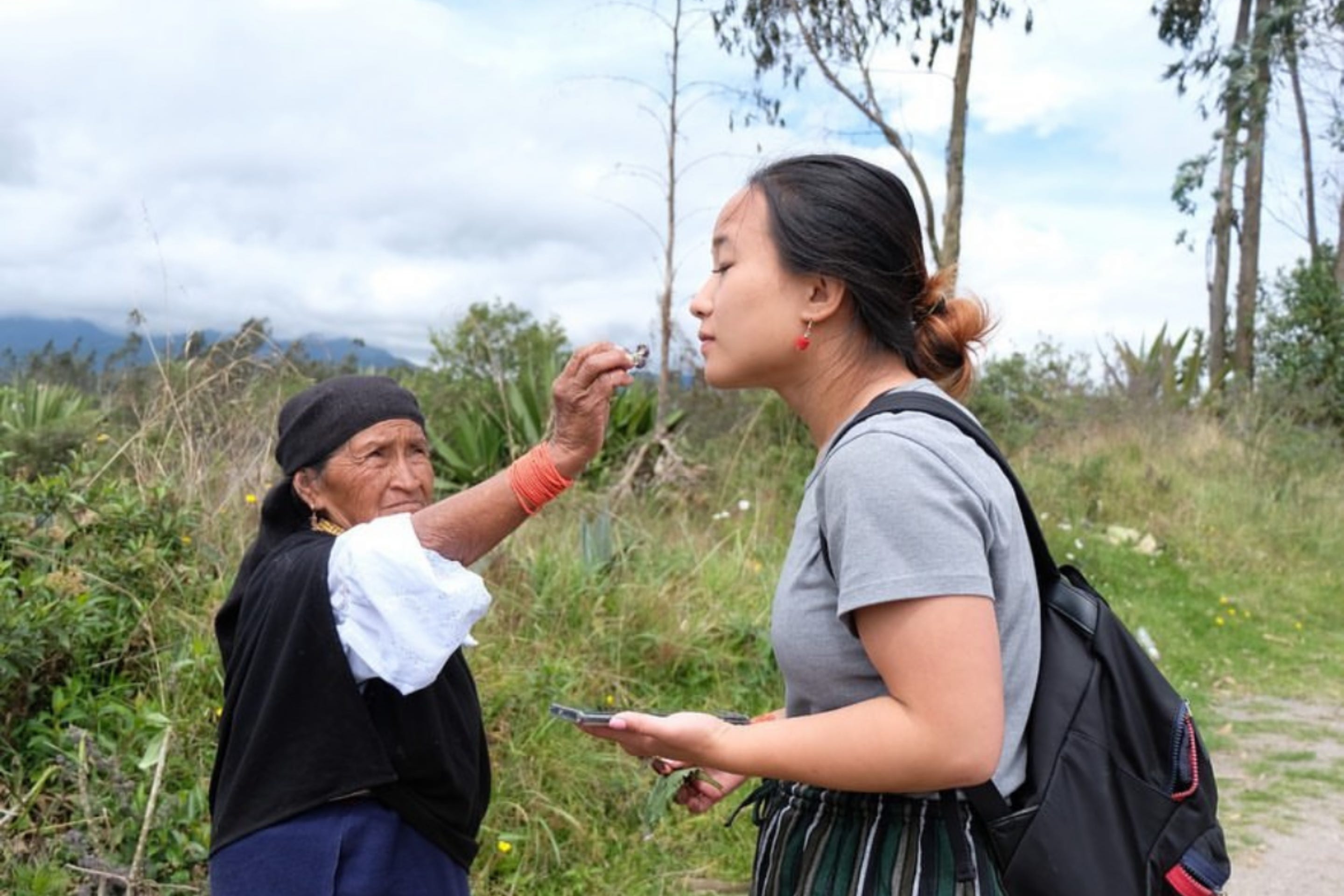
This means Indigenous Peoples and Local Communities relate to their own technology and external technologies in a way that is functional to the job they need to do. They are functional to the market. They are functional to the operational strategy. They have a relationality. So, they have a relationship to the way they interpret, manage, understand, observe, and apply those findings.
Indigenous R&D+I is really at the heart and at the center of Indigenous relational science, technology, mathematics, and engineering.
Indigenous R&D+I is really at the heart and at the center of Indigenous relational science, technology, mathematics, and engineering.
Then we start thinking about the limitations, perhaps, of some of the works—early on I talked about some of the frameworks—to work with Indigenous communities or to integrate, incorporate, and so forth, Indigenous knowledge.
BioKulture Systems Design (BSD) came about because, in Indigenous philosophies and legal systems thinking, nature is a partner. We are partners with nature; they (all the elements of nature that creates all of life) are our colleagues. You’ve probably heard this framing lately, calling nature intelligent. If nature is intelligent, then they need to be part of that design system. If a community lives in an intelligent nature, that makes for a very intelligent human living in an intelligent ecosystem. So that person needs to be in the ecosystem.
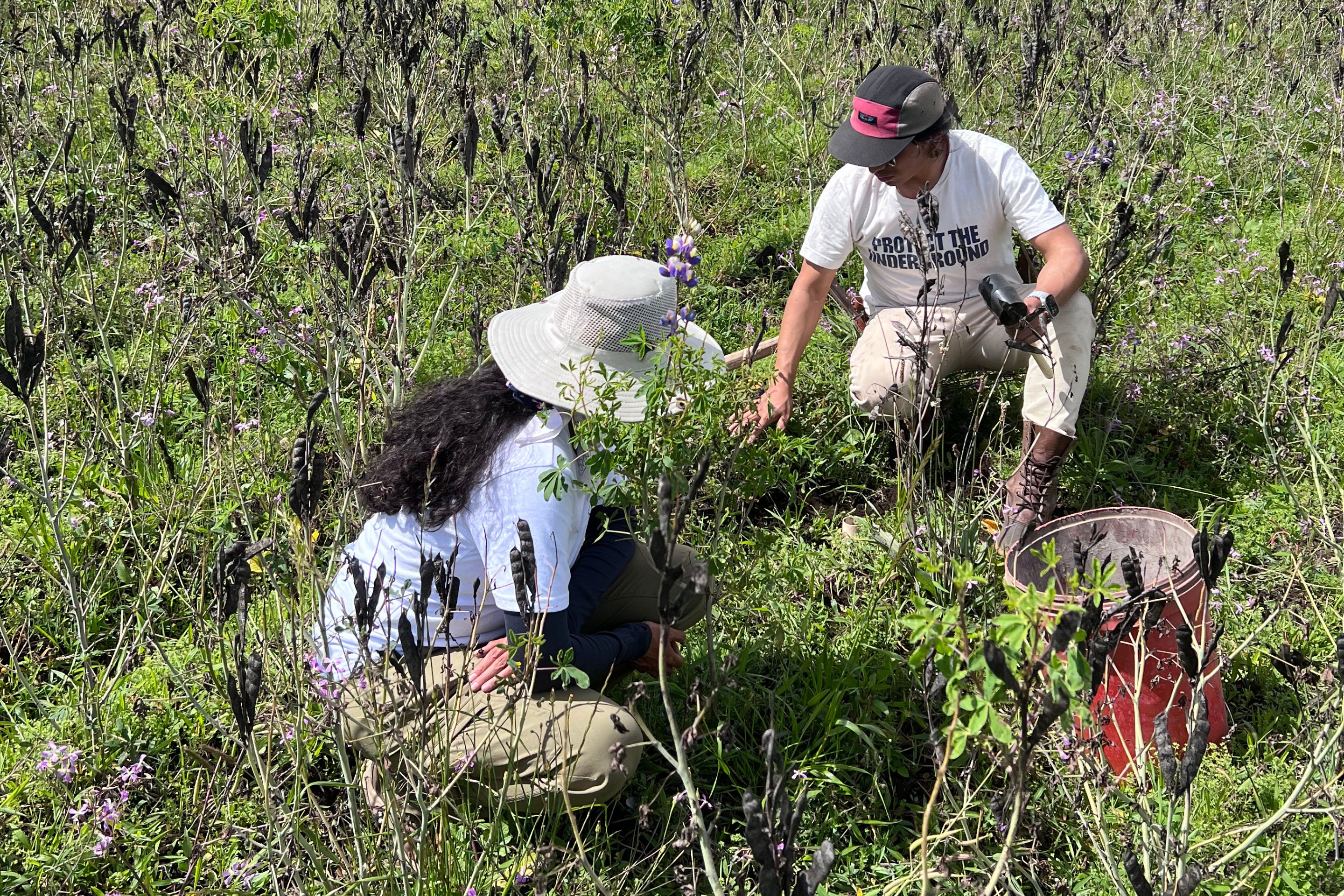
In Indigenous philosophies and legal systems thinking, nature is a partner. We are partners with nature; they (all the elements in nature that creates all of life) are our colleagues.
But we cannot know what nature wants, right? Because we don’t speak the same languages. But communities do. Communities, I believe, have a better, or keen sense-making of what a healthy ecosystem looks like.
At the end of the day, communities will end up living in the ecosystem, no matter what. I will leave for studies overseas, to do continuous work in consultancy and external actors will exit the ecosystems as soon as the projects or resource extraction crosses the tipping point or profits start plateauing.
So, that design really needs to speak to the healthiness that is defined by the people who need to live next to it.
BioKulture—with a ‘K’—the ‘K’ is intentional. We (Kinray Hub) use BioKulture to really send a signal across the English and the Spanish language of language mutation. This is from a paper (language evolution—kreolization of the written language) we’re still working on it with an Aboriginal colleague from Australia (Tyson Yunkaporta (Apalech Clan). It’s a language kreolization (evolutions, mutation) tool where we retool and repurpose WEIRD terminologies, but we add this very intentional—you can call it a mutation—recombination and transformation of the word.
We use BioKulture to really send a signal across the English and the Spanish language of language mutation.
In the context of BioKulture Systems Design, ‘Bio’ means all the biological diversity and the territory being. ‘Kulture’ means the culture that has evolved alongside biological diversity. Both are intrinsically bound because the culture is an output of [how] nature has shaped the culture, and the culture has shaped that nature.
Bio’ means all the biological diversity and the territory being. ‘Kulture’ means the culture that has evolved alongside biological diversity. Both are intrinsically bound.
A case in point is the Amazon and the Andes, two of the most strange places for a population to have survived. These biocultural regions are hard; they are difficult. When they are cold, there is not plenty of abundant water. The Andes are very cold, steep, and high altitude. And the Amazon has so much biodiversity that it can kill you. And yet, the communities have evolved side by side.
BioKulture brings those two things together, not as a co-existence. That is the ‘K.’ [K] is the kinship system (a pillar in Indigenous Biocomplexity Systems Theory). [K] is a remembrance of our embodiment that we are in this together; we’re living together. We are not co-existent.
K is the kinship system. [K] is a remembrance that we are in this together; we’re living together. We are not co-existent.
To co-exist, somebody needs to give you permission akin to WEIRD “democratic compromise ambiguity notions”, and that is not necessarily true for Indigenous communities. We are continuously caring. We have a duty of care for nature. So we don’t feel like we’re co-existent or “compromising nation-building”; we’re living. We’re living with nature (akin to macro-scale embodiment / endosymbiosis).
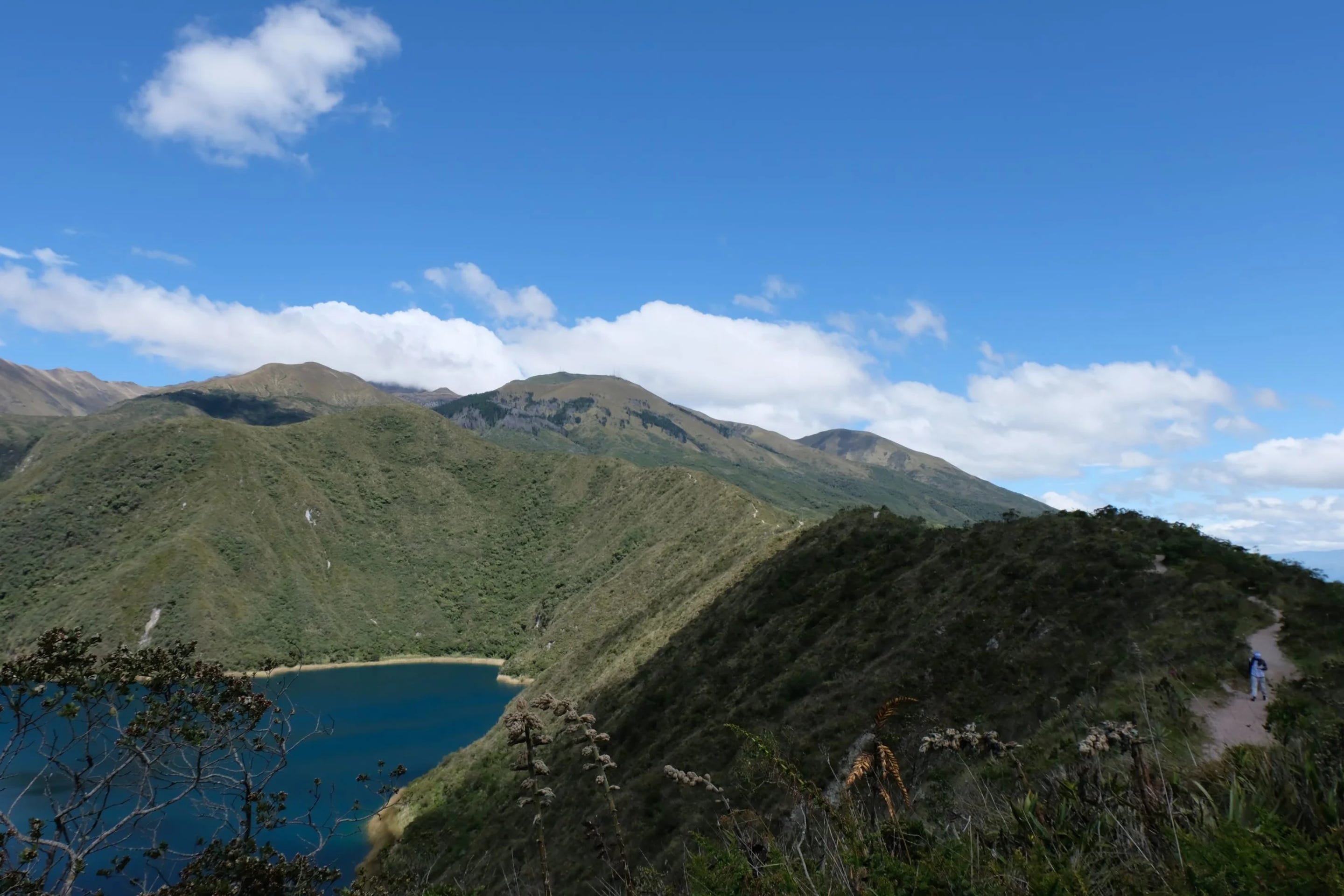
We are continuously caring. We have a duty of care for nature. So we don’t feel like we’re co-existent or “compromising nation-building”; we’re living.
We’re living with nature (akin to macro-scale embodiment / endosymbiosis).
That’s a key element we use. We use that language mutation such that when a non-Indigenous reader reads the language, it’s not about having Indigenous language included in this, but having a key transformation that signals that the word carries two worldviews. It has a WEIRD worldview (of being a bio-culture) and has an Indigenous worldview of having a deep time biocultural connection to what is being said.
We use that language mutation such that when a non-Indigenous reader reads the language...the word carries two worldviews.
BioKulture Systems Design brings nature, culture, and the external outer together to create a diplomatic embassy such that we can sit down and think about what a system looks like if we were to design it and commit to do it. In that design, Rights of Nature are inherently applied, and Rights of Indigenous Peoples are inherently embodied. The outcome of that design system is already in Indigenous Data Sovereignty, which incorporates natural laws and Indigenous Peoples rule of law. In that way, we can proceed. That’s a CARE-ful modification to WEIRD research, development, and innovation frameworks.
We have used the [’K’] in multiple key areas to send a signal—a mutation, a transformation, a recombination—of keywords, like ‘Kommoning.’ We spell it with a [’K’] because kommoning for us is not about the ‘tragedy of the commons.’ It’s about [how] we manage our ecosystems; how we are managing ourselves in response to the ecosystem in which we live.
It’s not about commoning from the sense that the word usually implies. There is no tragedy. In our sense, it’s about kommoning those commons in order to maintain a healthy ecosystem and a healthy partnership with members of the community who need access to those areas.
Are we doing it very well? No, not everybody is doing it very well. But what we find with these language mutations is that we create a language design that comes from Indigenous systems thinking, Indigenous systems design, Indigenous anticipatory futures systems thinking.
We are, in many ways, forced to speak, interact, and communicate in a foreign language that is not ours, such as English, which has become a lingua franca. And yet, we need to communicate how we are in relationship with our territories. We need to find ways to create this Kreolization.
We are, in many ways, forced to speak, interact, and communicate in a foreign language that is not ours, such as English, which has become a lingua franca.
I don’t know if you’re familiar, but there are a lot of Creole languages. Australia has a Creole language; Haiti has a Creole language (actually called Creole). Sometimes they are called dialects—no, they are languages in their own making. We, as communities, are continuously creating languages.
I will tell you why: because now we are interacting with external apparatus and external concepts. I remember the first time we saw a cell phone. We didn’t have a word for cell phones in our language. We had to design the language (language evolution or making); we had to make the language to communicate what the cell phone was for us (Kara-Kichwa Peoples). So we call it ‘Wĩłły-wĩłły.’ Why? Because when it rings, it sounds like a little frog. And in our language, that sound is called a Wĩłły-wĩłły. We had to make that word; we had to design it.
To send across those language designs, we need to create the language mutation tools in order for us to package. Not necessarily that there is a different meaning, but for the reader to know that there are two worldviews that we need to consider and carefully approach when thinking about these design systems, or ‘Kommoning’ the commons, or ‘Kapital.’
Capital, in the WEIRD ecosystem, is about cash or currency, but in a lot of communities, kapital doesn’t really make a lot of sense unless it has context. So a lot of times, kapital comes from relationships. Kapital comes from kinships. Kapital comes from having genealogy to the things that we’re doing. So we also mutated the word capital in order to make sense across the idea that capital might not be a universal way of thinking about kapital. There are other ways of thinking about capital. I think the regenerative economy has also tried to articulate its own principles of different kinds of capital from social to spiritual and blah, blah, blah.
There’s an attempt to send a signal that there are different ways to do capital. We are just looking into designing languages to send a signal across to make a clear standard. It has a parallel worldview that we need to also have in consideration when we are building policies, building technologies, building outputs that will somehow impact communities on the front lines.
Language design is trying to think about [how] we maintain relationships with the communication we’re doing back and forth, and also, in a way, helping with the governance architecture (in nation-building, language is our power source). When we read back those resolutions and frameworks, and they have these language mutations, we know that you are understanding—[you] meaning the external data actor that is interpreting and working in those policies. When we read it, we can see our language mutation and how it’s being described is a key way to come into agreement without having to ‘translate’ some of the elements, but rather understand that these languages can work in parallels and cooperate two worldviews to better understand between ecosystems.
And that’s why we’re doing language evolution–mutations.
INL: Looking forward, what does partnership—not integration—actually look like in practice?
WarīNkwī: Well, to begin with, I think when both systems exist and complement each other... Imagine you are in a river. We’re going through the river. Or, imagine you are on a highway. You’re going in the same direction. You are in your own car, and the Indigenous person is in their own car. And you are going down the same road, parallel. You are in your own ecosystem, in your own being, listening to your own music, blasting your own A.C. The Indigenous person is in their own system, listening to their own music, eating their own chips, blasting their own heat. But we are both on the same road. Are we coexisting, or are we living? Are we heading in the same direction, parallel to each other, knowing that when we need to, we can stop and help each other? Knowing that you have a friend’s hand and a good neighbor next to you, going along the way with you. In this context, autonomy, self-determination, and ethical space & spatial justice are dynamically interacting.
When we do this, it’s not about recognition; it’s about knowing that we have arrived at the place we wanted to arrive—where we are not seeking validation, but we’re living well. The dynamic interactions of autonomy, self-determination, and ethical space & spatial justice move ‘us-all’ from systems change mantras to systems evolution, operationalizing BioKulture Systems Design, polygovernance, language evolution, and parallel safeguards for transparency and accountability of the science model of neutrality.
When we do this, it’s not about recognition; it’s about knowing that we have arrived at the place we wanted to arrive—where we are not seeking validation, but we’re living well.
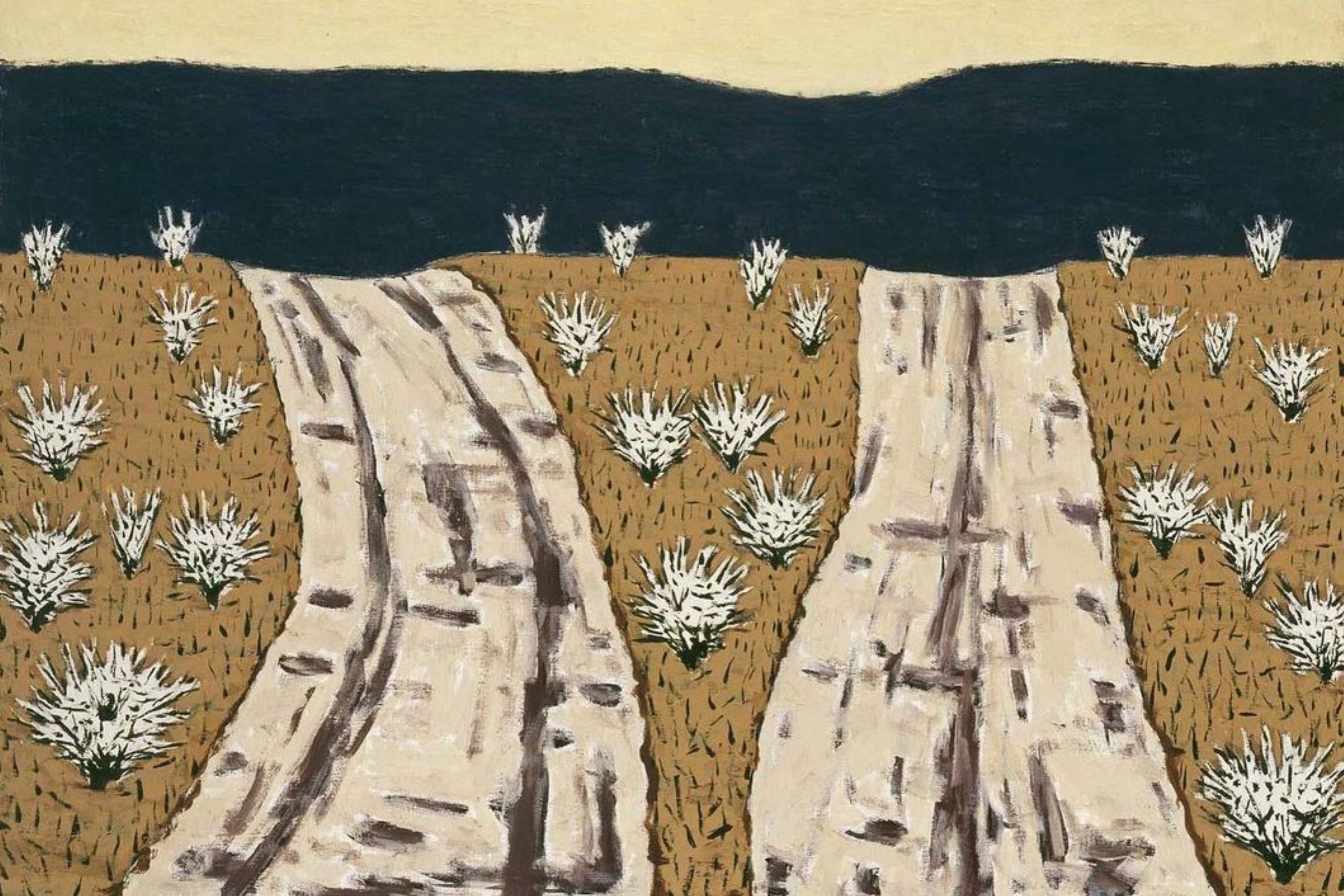
When Indigenous Peoples start exercising their Indigenous institutionality, some of our most precious key biodiversity areas will flourish, because they might find different ways to interact with those ecosystems. We might have seasonal tourism rather than massive tourism. We might have research, development, and innovation focused on the genomics of the ecosystem in temporal times, where one is learning from the other ecosystem.
When Indigenous Peoples start exercising their indigenous institutionality, some of our most precious key biodiversity areas will flourish.
Imagine if we were to really fulfill the promise of synthetic biology7, and we were to restore some of these oil spills, some of these open-pit mining areas, and contaminated soils. Imagine if we were to put biology into action. Who will manage it? This is where Indigenous institutionality, coming together, is really bringing each other’s responsibility and accountability to make sure that those solutions speak to the promise of that technology and speak to the promise of good for nature and community.
What will happen is that we will start realizing the promises we make—the myth businesses live by that is “free and good for all”. I just mentioned before, we are telling communities to produce more, but there are so many barriers for communities to actually sell to a fair market. There are too many problems for good organic, regenerative (however you want to label it) corn, quinoa, or tubers from the Andes Mountains or the Amazonia to make it to the urban areas in affordable practices, because the myth of businesses make those problems harder and harder.
So, by bringing Indigenous institutionality—meaning cooperatives that can gather and distribute these things, better distribution systems that ensure they arrive at the urban ecosystems—that’s innovation to solve food inequalities and food deserts.
Bringing Indigenous courts means that some of the things we are dealing with—crime, insecurity, a lot of injustices—can be handled differently. ‘Us-all’ lives in imagined realities. Consider how the Sept.-Oct. 2025 Ecuador National Strike could have gone under Indigenous courts; for instance, The Union of Peasant and Indigenous Organizations of Cotacachi (UNORCAC) in Imbabura, held public due process for military and police individuals who violated human rights. The outcome of the due process exemplified regenerative law/justice since the defendants learned and offered public apologies for their wrong doings against the Indigenous Peoples; contrary to the Ecuador government who punished Indigenous demonstrators with jail in maximum security prisons. Because the laws often are meant for punishing, incarceration, and removing people’s freedom. And some people shouldn’t be in jail; they should have been judged differently. Indigenous courts can support that. Small crimes, small things that they do because of poverty, because they have been impoverished by the same system of economics.
How is it possible that you become somebody that needs to mug somebody, to feed your family? Now you need to spend five, ten years—how can they care for the family?
For instance, right now, a community member is in jail for protesting his rights during the national strike in Ecuador in September and October. He is in a maximum-security jail. For what? For resisting, for his rights. Why? What crime has that person committed? And you know what is the most sad part? His mother is an elder with health issues. That person who is in jail was the caregiver of that human being. That is the economy [the way resources, labor, and value are structured in society]; that is the problem of the economy. If Indigenous courts were functional in the institutionality, we can innovate the way that we run our justice infrastructure for the different taxonomy of crimes that we see, the different levels. That person should have been judged in an Indigenous court. He should never have gone to a maximum security prison. That is in violation of all human rights. That’s like a torture, if you think about it for an innocent person, whose only crime is protecting the right to live in a free territory with his elder sick mother. What a crime, dear Lord.
We developed the CALIFund (Culture, Ancestry, Land & Indigenous Futures Fund) to catalyze recovery in our communities in Imbabura, Ecuador. ‘Us-all’ can be ‘rainmakers’/changemakers with just +$26 (donate, contribute,impact invest to restore the supply chain quickly)
Then in innovation, we are running out of room for our ‘just transitions’. We are running out of room. We don’t have enough space to put solar panels or wind turbines. We are running out of places. Where can they go? Well, there are two options: We can further deforest, we can further degrade nature, or we can partner with those so-called Indigenous communities and local communities to have a real partnership to do the just transition.
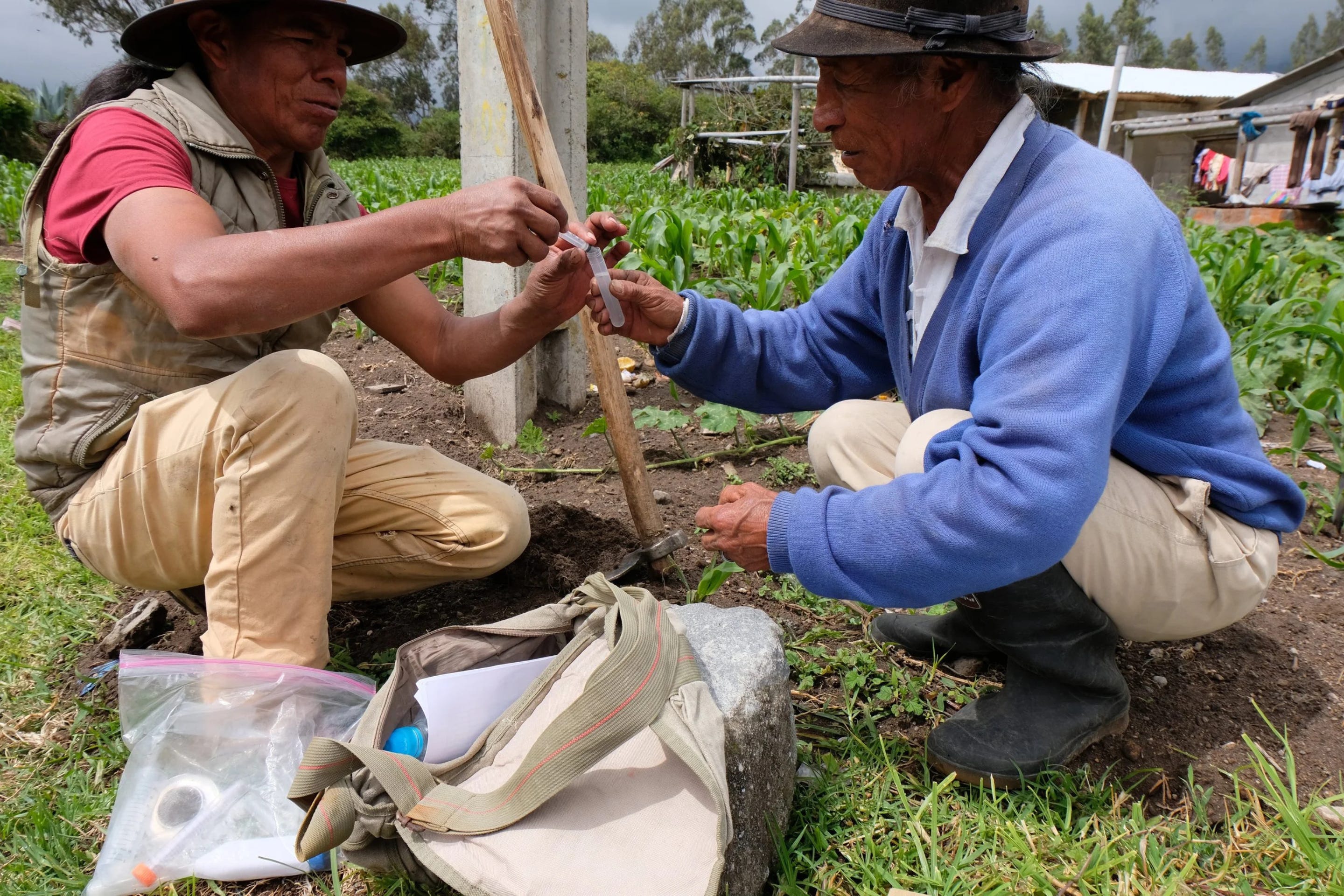
We can further deforest, we can further degrade nature, or we can partner with those so-called Indigenous communities and local communities to have a real partnership to do the just transition.
We are not opposing just transitions, no—they (Indigenous Peoples and Local Communities) are a shareholder of the investment. They are direct beneficiaries of that. Think about the level of innovation there. No more red tape. No more scandals from poor community engagement. Projects that aren't properly vetted face opposition, protests, litigation. After litigation, is that innovation? Just transitions? Regenerative economy? I don't think so.
The path forward is Partnerships Design by implementing BioKulture Systems Design (BKSD). BKSD can walk 'us-all' through those partnership designs because it brings what? Nature's intelligence. It belongs at the design table. The community where the innovation will happen needs to be in the decision-making. And the person proposing the solution, the development, the innovation, the research, brings them together and figures it out. What are some of the limitations that we need to overcome?
The path forward is Partnerships Design by implementing BioKulture Systems Design (BKSD).
Remember what I said before: Indigenous Peoples are looked at as obstacles to development, innovation, economic growth. Wait a minute. They have just become a cooperation pillar of the just transition, a cooperation pillar of regenerative economy, a cooperation pillar of a justice system, a cooperation pillar of the healthcare system, a cooperation pillar of the education system.
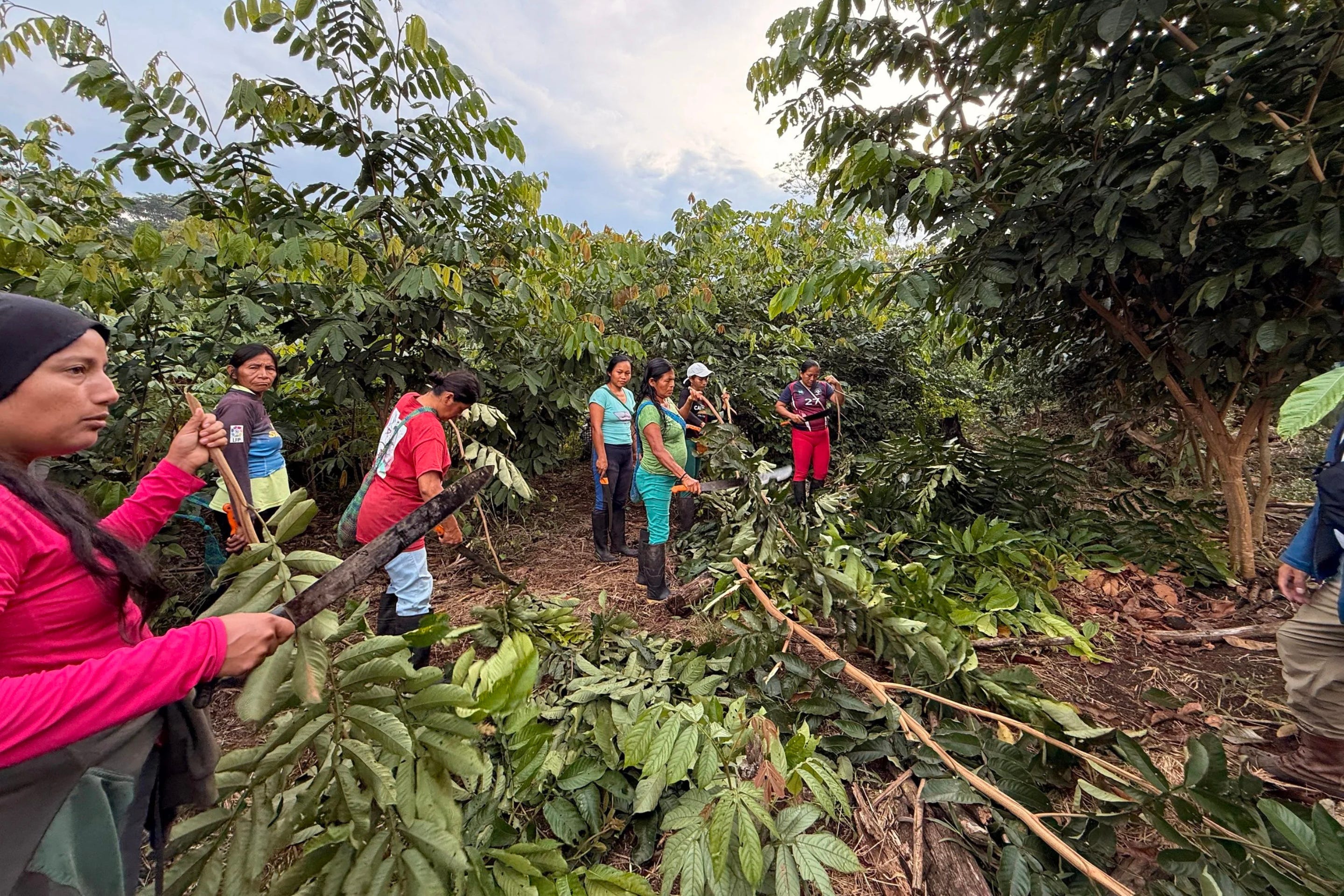
Indigenous Peoples have been an integral part all along—to make possible what we are fighting for right now: how to escape the polycrisis. A lot of people are discussing the polycrisis. The biggest polycrisis is that we will have limited room for where to escape due to climate change impacts, effects, and tragedies that will happen.
That is where we are. And that is bringing together and picturing yourself, going in your beautiful new car, fueling renewable energy, and the next person next to you in the same renewable energy, in the same road, going side by side, knowing that—that is my people. That is my neighbor. That is the person. Because of her/him, I am me. And because of me, he is he and she is she. And because of this beautiful ecosystem, we are what we are. That is cooperation creating a path forward. And that is not a dream. That is a reality that we can make happen.
I see many small efforts—either from climate change and conservation and mitigation—that are taking footing. The COPs, they are trying to make international agreements to fund frontline communities, conservation, just transition efforts to make these elements more possible.
And you haven’t heard me all this time talk about Free, Prior, and Informed Consent (FPIC) as the silver bullet, because everything that we have discussed through those frameworks that we have been working with, and I know many other organizations are working similarly through Indigenous-led projects, infrastructures, and companies, FPIC is being worked already into that design. Such that it can hit the road in innovation. And for that, we need Partnership Designs such that the company, the external data actor, the community, and nature enjoys their fair share in the investment of this planet. That is the path forward.
You can find WarīNkwī Flores’s research on ORCID, visit Kinray Hub to learn more about their purpose and ongoing projects, and support the Recovery Fund to help the victims of the Indigenous National Strike in Ecuador, 2025.
WEIRD is an acronym that stands for Western, Educated, Industrialized, Rich, and Democratic—originally developed by researchers to describe the narrow demographic typically studied in behavioral sciences. WarīNkwī uses WEIRD more broadly to refer to the knowledge systems, institutions, and worldviews that dominate global research and policy.
Plethoras are abundances or large collections. WarīNkwī refers to the extensive written works and citations that WEIRD academic traditions rely on—texts by Aristotle, Adam Smith, and other named historical authorities. Indigenous knowledge systems, by contrast, don’t have these collections of individual authored texts; knowledge is transmitted orally and communally (Data is tied to Place (”our libraries are the landscapes we inhabit”). Governed by customary law: data belong to community and ecosystem).
Semantic justice is the right of Indigenous peoples to control how their knowledge is interpreted and applied, preserving its cultural context and meaning rather than forcing it through Western validation frameworks.
The Collaboratory for Indigenous Data Governance (IDG) at the University of Arizona develops research, policy, and practice for Indigenous data sovereignty.
CARE Principles are a set of guidelines for Indigenous data governance: Collective benefit, Authority to control, Responsibility, and Ethics. They complement the FAIR principles (Findable, Accessible, Interoperable, Reusable) by prioritizing Indigenous rights, interests, and self-determination in the management and use of data.
Linking Arms Together: American Indian Treaty Visions of Law and Peace, 1600-1800 by Robert A. Williams Jr. (Oxford University Press, 1997) is a sophisticated survey of treaty-making that recovers a deeper understanding of how Indigenous peoples used legal traditions and rituals to forge a shared, multicultural society with European settlers on the early frontiers of North America.
Synthetic biology refers to the design and engineering of biological systems to perform specific functions. In this context, WarīNkwī frames it as using biology as a living technology for restoration and regeneration. He imagines a future where the tools of synthetic biology—such as engineered microbes or biological systems designed to clean pollutants—are guided by Indigenous governance and ethics rather than extractive industry, ensuring that technological innovation serves the land and community.